Grease: What It Actually Does & Why It Matters More Than People Think

By: Sammuel MacMullin – Proven Mining Solutions Inc.
Grease is one of the most overlooked maintenance items in heavy equipment. Everybody knows they are supposed to grease the machine. Far fewer people actually understand what grease is doing, why different greases exist, or why proper lubrication can dramatically change component life. And in environments like Fort McMurray, where equipment operates in high-silica sand and abrasive mud, grease becomes even more critical. Because out here, that dirt is not just dirt. A lot of it is basically liquid sandpaper.
⚙ What Grease Actually Does
A lot of people think grease simply “makes things slippery.”
In reality, grease performs several critical functions:
reducing metal-to-metal contact
carrying load between moving surfaces
dissipating heat
preventing corrosion
sealing contaminants out of joints and bearings
In many applications, grease is not just a lubricant. It is also a contaminant barrier.
That is extremely important in mining, construction, and muddy environments.
🧪 What Grease Actually Is
Grease is made up of three primary components:
base oil - The base oil performs the actual lubrication.
thickener - The thickener acts like a sponge, holding the oil in place until pressure or heat releases it into the moving surfaces.
additives - The additives improve performance under specific operating conditions.
Different greases are engineered for different environments and load conditions.

🔬 Understanding Moly Grease
One of the most common greases used in heavy equipment is molybdenum-disulfide grease — commonly called moly grease. Moly grease contains microscopic solid lubricating particles designed to protect components under extreme pressure and shock loading.
That is why it is commonly used in:
pins and bushings
heavily loaded pivot points
undercarriage applications
slow-moving, high-load components
The moly particles continue providing lubrication even when the oil film becomes compromised under heavy load.
❄ Winter Grease vs ☀ Summer Grease
Grease behavior changes significantly with temperature.
In cold weather:
grease thickens
flow characteristics change
automatic lubrication systems work harder
some greases may not flow properly at all
That is why winter-grade greases are formulated differently, often using synthetic base oils with improved low-temperature flow characteristics.
In summer:
heat resistance becomes more important
oil separation increases
thinner greases may not stay in place properly under load
Using the wrong grease for the environment can lead to:
poor lubrication
plugged auto-lube systems
dry pins
accelerated wear
🌧 Silica Contamination & Abrasive Wear
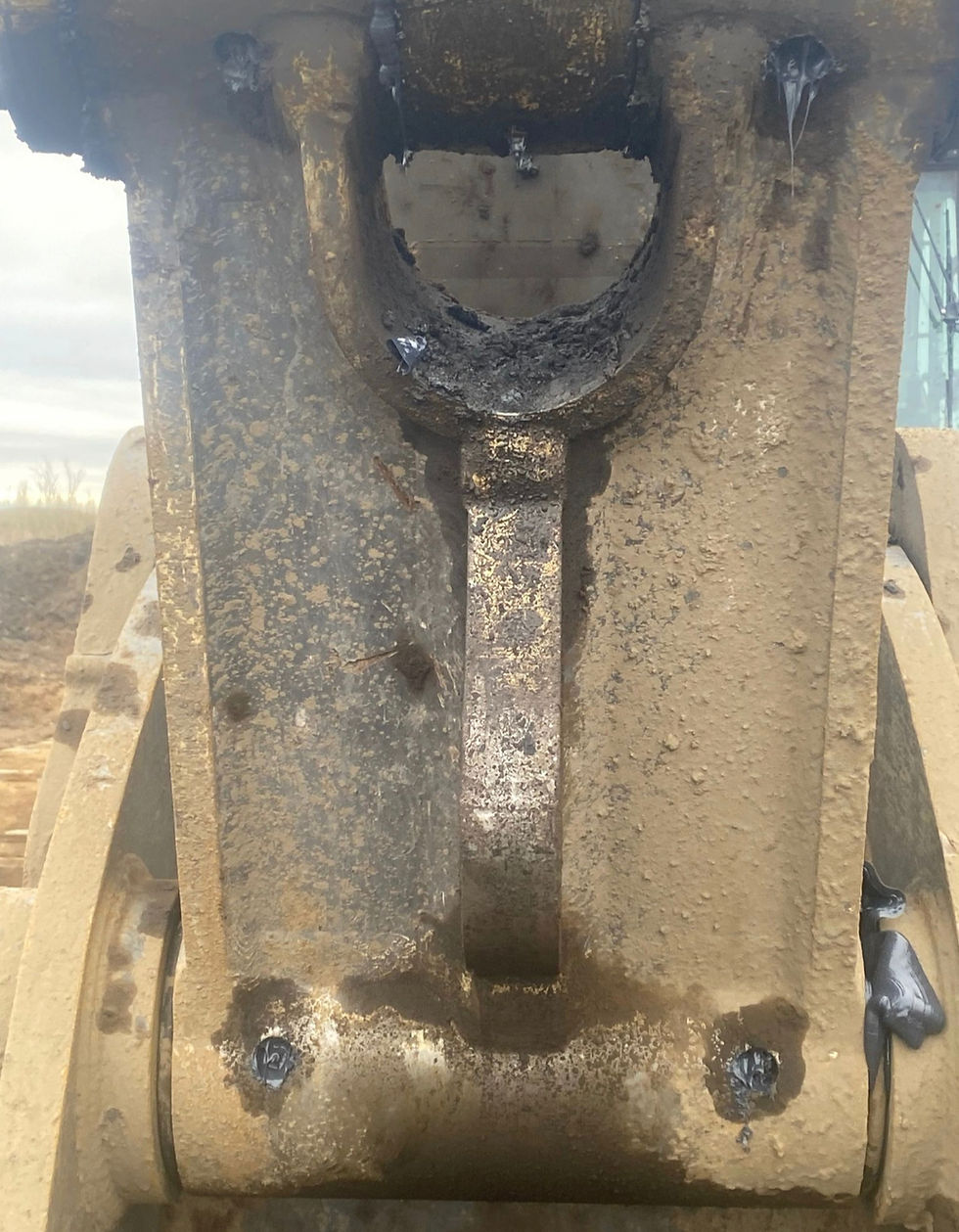
Where we work in Fort McMurray, silica contamination is a major factor in component wear. Silica is highly abrasive. Once mixed with grease, mud, and water, it essentially creates grinding compound inside pins, bushings, bearings, and rotating joints. That is one reason why greasing intervals often need to increase in high-contamination environments. Fresh grease does not just lubricate. It helps purge contamination out of the joint.
🔄 Why Some Grease Seals Are Installed Backwards
This surprises a lot of people. There are certain applications where grease seals are intentionally installed backwards. Normally, a seal is installed to retain grease inside the cavity. But on some automatic lubrication systems, especially in high-contamination environments, seals may be reversed intentionally to allow grease to purge outward.
Why?
Because the auto-lube system continuously supplies fresh grease into the joint.
Instead of trapping contaminated grease inside, the fresh grease pushes old grease, water, and contamination back out of the cavity.
In abrasive environments, that constant purging can dramatically improve component life.
🛠 Automatic Grease Systems Are Not “Set and Forget”
Auto-lube systems are excellent tools when they are functioning properly.
But they still require inspection.
Common problems include:
plugged lines
damaged injectors
empty reservoirs
broken fittings
uneven grease distribution
One failed injector can leave a pin dry while the rest of the system appears to be functioning normally. Just because the auto-lube tank is full does not mean the machine is actually getting grease where it needs it.

🛞 Overgreasing vs Undergreasing
More grease is not always better.
Overgreasing can:
blow seals out
trap excess heat
create hydraulic pressure in cavities
attract more contamination buildup
Undergreasing obviously creates its own problems as well:
dry joints
accelerated wear
corrosion
seized pins and bushings
The goal is proper lubrication not simply using the most grease possible.
🛠 Tech Tip & A Quick Story from the Field
If you have worked on heavy equipment long enough, you have probably dealt with a dry joint that just refuses to take grease. Usually it starts with a squeaky pin or a joint that will not purge properly. A lot of times the grease has hardened inside the drillings or grease passage itself because the component has not been greased consistently. And just holding the trigger while your poor Milwaukee sits there screaming for mercy usually is not going to make that joint magically take grease again. If the passage is plugged solid with hardened grease and contamination, the grease has nowhere to go.
My usual approach is to remove the grease nipple, line, or fitting entirely first.
Then I will take a pick and carefully clean out as much hardened grease from the passage as possible. Once the blockage is partially cleaned out, I reinstall the fitting and try greasing the joint again.
If that still does not work, one of the best tricks I have found is using an adapter connected to a porta-power hydraulic pump.
At that point, you can apply up to 10,000 PSI of hydraulic pressure directly into the grease passage and usually force the blockage clear.
After that, reinstall the fitting properly and grease the joint normally.
Now, this does not magically undo years of neglect, and it does not remove the wear or damage that has already happened.
But at least the joint is taking grease again moving forward.
Sometimes the goal in the field is not making a component brand new again overnight it is getting lubrication back into the joint, slowing the damage down, and keeping the machine operational while saving the client from a much larger repair.
Sometimes what looks like a failed pin or bushing is simply years of hardened contamination plugging the lubrication passage.
👷 The Big Takeaway
Grease is one of the cheapest maintenance items on a machine and one of the most important.
Understanding grease types, operating conditions, contamination levels, and lubrication strategy can dramatically extend component life and reduce downtime.
In harsh environments like Fort McMurray, proper lubrication is not optional.
It is survival.
At Proven Mining, maintenance is not about blindly following intervals. It is about understanding what the equipment is experiencing and adjusting accordingly.
Trusted on contract. Proven in the field.


Ah that's a good one!